
We can break glass and meet Hungarian Jedi: the doors to the most exciting factories are opening
One facility will feature glass-shattering demonstrations and heated glass, another will host a beer tasting, while a third will show how a computer-aided design is transformed into a tangible component. On November 13, factories across the country will once again open their doors, and, judging by reports from the participating companies, this year’s event will offer more than just the chance to look around. During a discussion previewing the "Night of Modern Factories," it was also noted that the education system needs to better keep pace with the rapid technological advancements taking place within these industrial facilities.
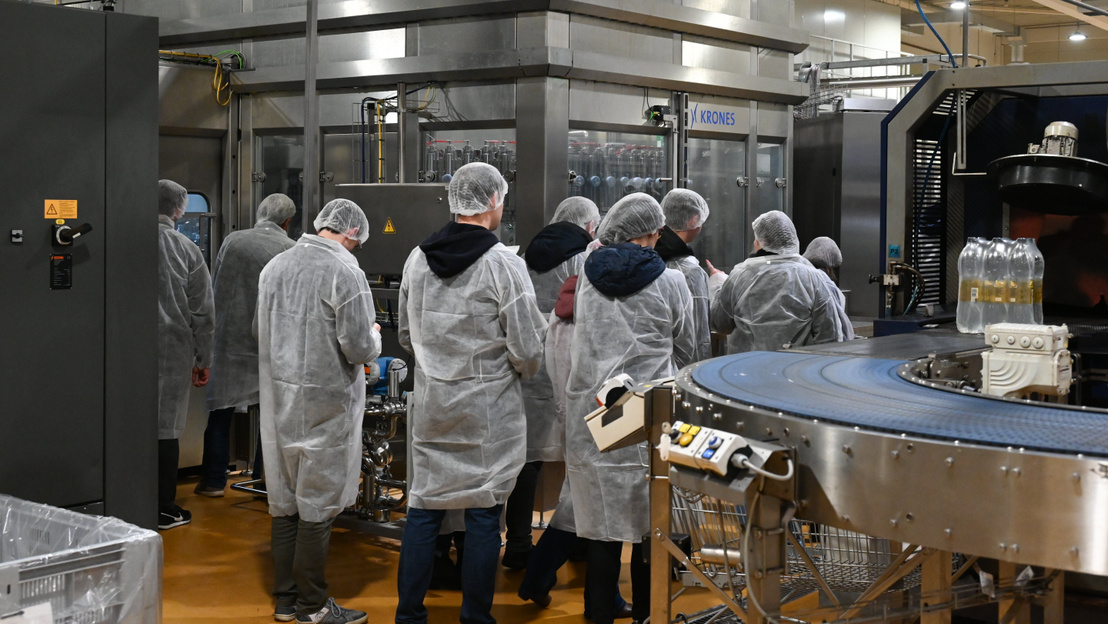
If you’ve ever wanted to break some glass, you’ll have the chance to do so in a controlled setting this November. Rákosy Glass is preparing for exactly that, in fact, jumping on glass is part of their plans for this year. If you’d prefer to try something else, you can get a feel for heated glass, learn the art of pouring a beer in Sopron, or see an industrial laser in action at TRUMPF.
Representatives from three companies offered a preview of this at the Gerbeaud Café, during a press event kicking off the tenth "Night of Modern Factories." The nationwide event, taking place on November 13, grants access to industrial facilities where, on any other day, simply asking to "take a look around" would not be enough to get you through the door.
Naturally, the companies have their own reasons for hosting visitors: they can showcase what they do and reach out to potential future employees, while staff members finally get the chance to explain their work, right there beside the machinery, to their own families.
Why doesn’t a cat get cold in the window?
Eszter Rákosy – managing director and owner of Rákosy Glass, a company specializing in architectural and interior glass – is well-acquainted with the moment of surprise that follows her introduction. When she mentions she works in the glass industry, many people immediately picture a traditional glazier wielding a glass cutter.
During a visit in November, she aims to showcase the vast scope of this profession today. One of the best ways to illustrate this is through a simple question: why doesn’t a cat get cold in the window? The answer lies in "heated glass", glass surfaces that can also function as a heating system. According to Rákosy, this technology is still relatively unknown, so visitors will have the chance to experience its capabilities firsthand.
There will be glass that visitors can touch, as well as glass brought out specifically to be shattered.
Breaking glass is actually part of the material analysis process: the way it shatters provides insight into the product's properties. Several interactive activities are planned for this evening, and the managing director has even hinted at the possibility of someone jumping on glass.
Meanwhile, the familiar industrial environment will be transformed with light projections and music, even the cranes will become part of the spectacle. According to Rákosy, the staff also find it inspiring to have the chance to showcase their work in such a unique way.
The company will welcome visitors at its showroom and processing plant on Noszlopy Street in Budapest.
Hungarian Jedis
It is easy to associate laser cutting with Star Wars, and this parallel did not escape the notice of the Managing Director of TRUMPF Hungary, either. Tamás Major recounted that upon joining the company, he was welcomed with the news that he had become the leader of the "Hungarian Jedis."
The company, which specializes in sheet metal processing machinery and laser technology, is highlighting a new 12-kilowatt laser cutting system this year. However, the experience is planned to go beyond simply watching the machine slice through metal. Major aims to demonstrate to the audience how a three-dimensional computer model of a component is transformed into a finished product.
According to the Managing Director, this serves as an excellent way to show young people why digital literacy is crucial in today’s industrial sector. After all, the speed of production depends on how effectively design, preparation, and machine operation can be synchronized.
It does not matter how fast a piece of equipment is if it has to wait for the next task or the information required to perform it. According to Major, a factory visit also offers parents and those about to choose a career path the chance to gain a firsthand impression of the kind of work performed in such a facility today.
Beer will be flowing – available for tasting and taking home
The Sopron brewery has an advantage: its product hardly needs an introduction. However, far fewer people have seen what happens before the beer reaches store shelves.
Anna Orosz, Marketing and Communications Director at the brewer Heineken Hungária, notes that the bottling and canning plant is a particularly striking part of the tour. This is where the beer is packaged; the bottles and cans moving along the line also demonstrate the pace of production.
The tour also covers the fermentation process, allowing guests to learn more about the steps that lead to the finished beverage.
This year’s plans include a tasting session and a demonstration of beer-pouring techniques.
Anna Orosz also hinted that visitors might not necessarily go home empty-handed. In addition to beer, the program will feature an investment aimed at reducing the brewery’s energy consumption. While this topic is less visually striking than the bottling line, it is significant in terms of the brewery’s production operations.
You can buy the machine, but the know-how doesn’t come with it automatically.
Following the discussion of program ideas, the conversation turned to a more serious question: who teaches people how to use the technologies showcased in these factories?
Speaking from the perspective of her own industry, Eszter Rákosy noted that the content of vocational training lags significantly behind the technologies actually in use. She argued that this is precisely why it is crucial to build closer ties with schools and training institutions. During factory visits, students could see the equipment they might eventually work with, while educational institutions could gain a clearer, more direct understanding of the skills required by companies. Tamás Major also suggested a more targeted approach toward professional audiences, noting that "open factories" could serve as a venue for companies to exchange experiences with one another.
In her opening remarks at the event, Ágnes Fábián, State Secretary for Economic Development, also highlighted the importance of knowledge transfer. She noted that, in addition to providing preferential financing and grants, it is essential to help businesses learn about and implement new solutions.
She identified the closer alignment of vocational training with market demands as a government objective. She further remarked that the state can shape the economic environment necessary for business operations, a process that requires listening to the companies themselves.
This year’s program, taking place on November 13, is organized by the Hungarian Economic Development Agency and includes both in-person factory visits and online presentations. Details regarding locations and how to register can be found on the event’s website: https://moderngyarakejszakaja.hu/
